
Dallas County Court Records After Arrest
The Dallas County jail roster is not the final court record. The roster shows arrest and booking data from Dallas County Jail, including charge text, arresting agency, bond amounts when posted, and holds for other agencies. Court records after a jail arrest are created through the judicial side. Dallas County is part of Arkansas's Thirteenth Judicial Circuit, and formal criminal cases are tracked through Arkansas court systems once filings are entered by the clerk. A recent arrest may take time to appear online because law-enforcement paperwork, first appearance activity, and prosecutor filing decisions do not all happen at the same minute.
The useful split is simple. Jail records answer custody questions, while court records answer filed-charge and case-status questions. Use Dallas County jail inmate records for current custody, recent releases, booking cards, and roster charge text. Use Dallas County jail mugshots for booking-photo questions. Use court records after an arrest to see the case number, parties, judge, filings, charges and dispositions, future events, judgments, and public documents when they are available online.
The Arkansas Judiciary's Search ARCourts portal is the main online route for Dallas County court records after a jail arrest.
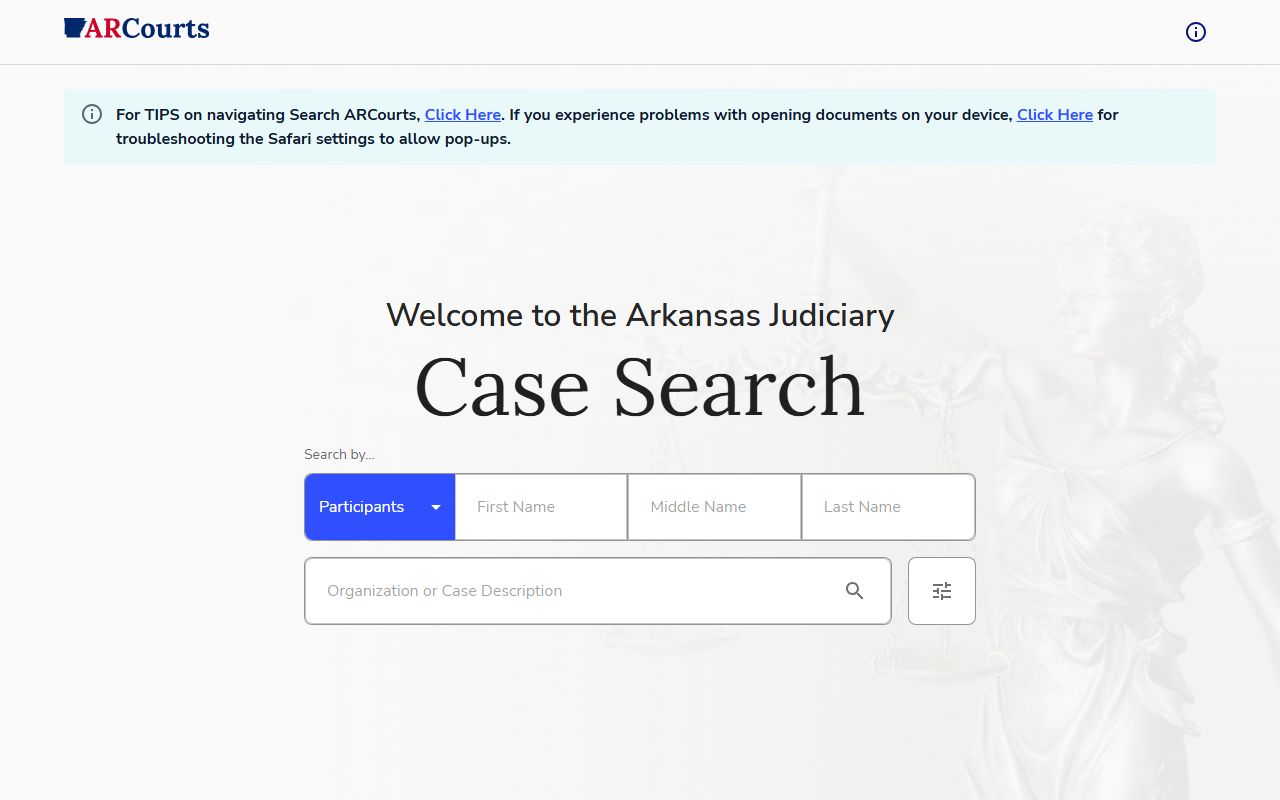
Because the portal is statewide, name spelling, county filters, and the right court level matter when matching a Dallas County arrest to a court case.
Find Dallas County Court Records
Search ARCourts is the starting point for public case information from courts using the Contexte Case Management System. The Arkansas Judiciary says the public can search when the participant name or case number is known, and that available information can include parties, judge, filings, charges and dispositions, future events, judgments, and some linked public documents. Some district court coverage varies, and material withheld under Arkansas Supreme Court Administrative Order 19 will not appear online.
- Start with the Dallas County roster entry. Copy the exact name, arrest date, arresting agency, charge text, and bond amount.
- Open Search ARCourts and search by participant name. Try middle-name, initial, and spelling variants if the first search fails.
- Filter toward Dallas County, district court, or the Thirteenth Judicial Circuit when the interface allows it.
- Open the matching case and read the charges, dispositions, hearings, filings, judge, and future events.
- If no case appears, contact the correct clerk because a new arrest may not be filed or indexed yet.
Felony and serious criminal matters generally route through circuit court. The Arkansas Judiciary circuit clerk directory lists Dallas County Circuit Clerk Dori Keeton at Third and Oak Street in Fordyce, phone 870-352-2307. Misdemeanors, traffic matters, and lower-level cases may route to Dallas County District Court in Fordyce, phone 870-352-2332, or Sparkman District Court, phone 870-678-2255, both listed in the Judiciary's district court directory. Ask the clerk for the criminal case index by defendant name and approximate arrest date when the portal is incomplete.
Dallas County Court Search Fields
The Search ARCourts interface is dynamic, so the exact screen can shift. The official Judiciary information page still gives a clear field map: name and case number are the core search routes, while result records carry the court data needed to trace a Dallas County arrest into a filed charge. Use the table as a practical checklist before calling the clerk.
| Field or Result | Type | Required | Use for Dallas County cases |
|---|---|---|---|
| Participant name | Search mode | Optional | Search by defendant name from the roster or citation. |
| Case number | Search mode | Optional | Best when a clerk, notice, attorney, or docket sheet gives the number. |
| County or court filter | Dynamic filter | Optional | Narrows the case toward Dallas County circuit or district court. |
| Charges and dispositions | Result data | n/a | Shows filed counts and outcomes when public. |
| Future events | Result data | n/a | Lists hearings, appearances, trial settings, or other court dates when public. |
| Documents | Result link | n/a | Some cases link filings, but sealed or restricted records are not public online. |
For background on the portal's scope, the Arkansas Judiciary publishes a Search ARCourts information page that explains case access, court coverage, and contact routes.
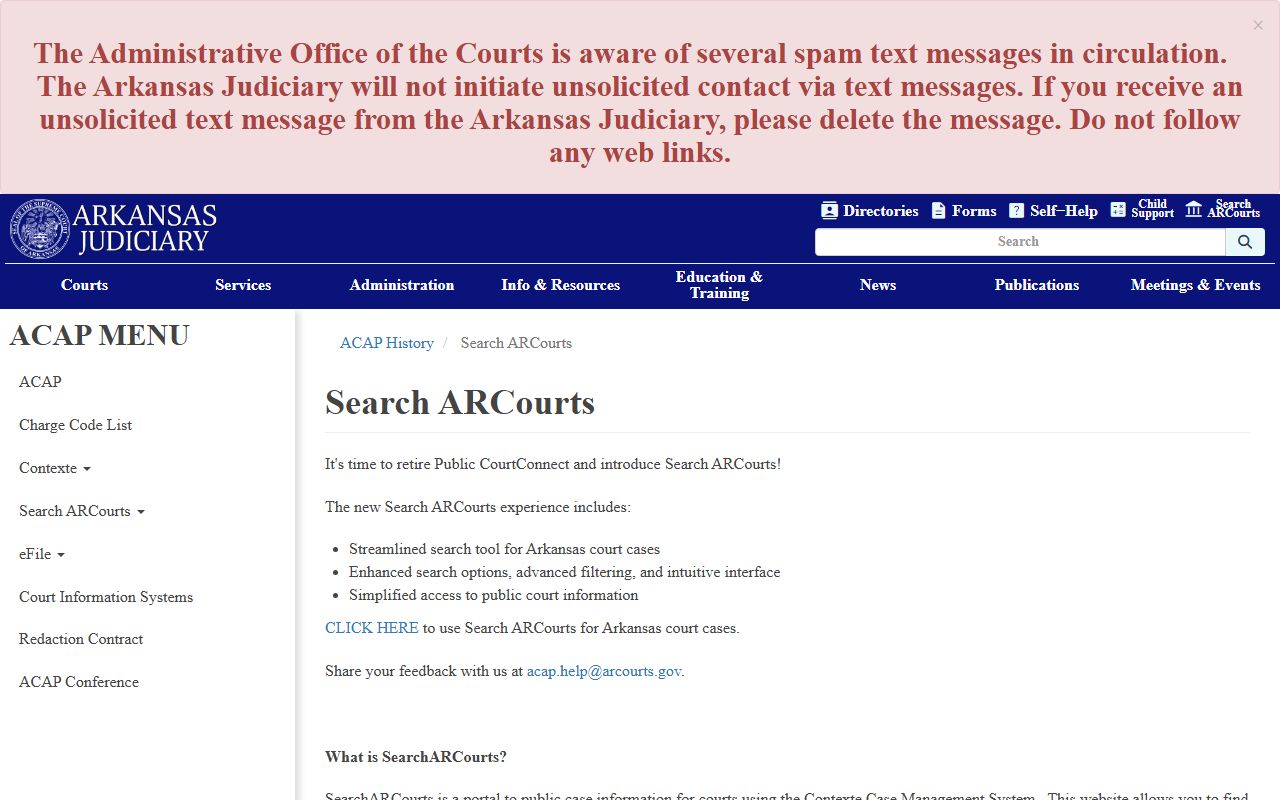
The Judiciary page is useful when a Dallas County court record is missing online, because it explains why clerk contact may still be needed.
Dallas County Arrest Charging Documents
After a Dallas County jail arrest, the prosecutor filing layer is separate from the jail intake layer. The Thirteenth Judicial District Prosecuting Attorney prosecutes criminal cases filed in Calhoun, Cleveland, Columbia, Dallas, Ouachita, and Union counties. That office, led by Prosecuting Attorney Jeffrey C. Rogers, decides how qualifying reports and affidavits are charged in court. The formal court record may use one charging document, several counts, amended counts, or no filed case if the matter is not pursued.
| Document | Who files or initiates it | Common use | What to check |
|---|---|---|---|
| Complaint | Officer or prosecutor | Starts many lower-level criminal matters | Allegation, date, defendant, and court assignment. |
| Information | Prosecutor | Common path for many felony charges | Formal counts, statute references, amendments, and dispositions. |
| Indictment | Grand jury | Used for certain serious matters | Filed counts, sealed status, and later court orders. |
The Thirteenth Judicial District Prosecuting Attorney homepage identifies the counties served and the office structure.
The office also publishes a prosecutor contact page for official routing, but defendants should not call the prosecutor for legal advice; the prosecutor FAQ says defendants in criminal cases should communicate through an attorney.
Dallas County Charge Status Records
A roster charge is a booking label, hold reason, or arrest allegation. A court charge is the formal accusation tracked in the case. The two can match, but they do not have to. Dallas County roster examples can show broad terms such as failure to appear, revocation, USMS hold, or hold for another agency. Search ARCourts may later show a district-court citation, a circuit-court felony case, an amended count, a dismissed count, or an older case tied to a new warrant arrest.
| Status | Meaning in a Dallas County court record |
|---|---|
| Pending | The case or count is open and has not reached a final public disposition. |
| Amended | The filed count changed after the original filing, often by charge wording, code, or level. |
| Reduced | The charge was lowered as part of prosecution review, plea activity, or court action. |
| Dismissed | The count was dropped by court order or prosecution action and is not a conviction. |
| Nolle prosequi | The prosecutor declines to proceed on that count, subject to the rules that apply to the case. |
| Guilty or conviction | A plea, verdict, or judgment resolved the charge as a conviction. |
Note: If the arrest is very recent, the court case may not show online until paperwork is filed and entered.
Dallas County Bond After Arrest
Bond information sits between the jail record and the court record. Dallas County's sheriff FAQ says a person may be released on their own recognizance, through a private bonding company, by property bond, or by cash bond. It also says the exact bond depends on the nature of the offense and should be confirmed with Dallas County Jail at 870-352-2002. The RPS roster can show bond amounts, but it does not publish a full bond order, accepted payment methods, or complete court conditions.
| Bond type | How it works locally |
|---|---|
| Own recognizance | Release on a promise to appear, when allowed by the court. |
| Private bonding company | A surety route listed by the sheriff FAQ; confirm the allowed bond type first. |
| Property bond | Uses acceptable property through the court or sheriff process. |
| Cash bond | Cash payment may be allowed, but the jail must confirm instructions. |
| No-bond hold | A USMS hold, other-agency hold, revocation, or warrant can block local release. |
Sheriff Mike Knoedl's September 19, 2025 update warned about callers claiming a loved one is jailed and demanding a bond fee. Use the published jail number before paying anyone. A roster amount by itself is not enough when a federal hold, other-agency hold, or failure-to-appear warrant is involved.
Dallas County Warrant Arrest Records
No active Dallas County public warrant-search database was found on the sheriff site. The official Most Wanted page exists, but it said to check back soon at inspection. A warrant can still appear indirectly after a booking, because the jail roster may show failure to appear, a hold for another agency, a USMS hold, or a supervision-related arrest. Search ARCourts can show the older court case, missed hearings, future events, and dispositions when the warrant is tied to a public case.
For a suspected local warrant, call Dallas County Sheriff's Office at 870-352-2002 or contact the court tied to the case. For district court matters, use the Fordyce or Sparkman district court contacts. For circuit matters, use the Dallas County Circuit Clerk. Federal warrant or federal custody questions may involve the U.S. Marshals Eastern District of Arkansas, which covers Dallas County.
Dallas County Charges vs Convictions
Being arrested in Dallas County is not the same as being convicted in court. A charge is an accusation or hold reason. A conviction exists only after a plea, verdict, or judgment. Court records after a jail arrest should be read by stage, because an arrest entry can stay visible while the court case later shows an amended, dismissed, or resolved count.
| Record point | Charge | Conviction |
|---|---|---|
| Stage | Accusation at booking or formal filing. | Final result by plea, verdict, or judgment. |
| Proof level | Based on arrest facts, probable cause, or prosecutor review. | Requires a legally valid plea, finding, or verdict. |
| Where found | Roster, complaint, information, indictment, or docket. | Disposition, judgment, sentencing entry, or court order. |
| Reader caution | May change or be dropped. | May still be subject to appeal, sealing, or later order. |
Dallas County Sealed Arrest Records
Public access has limits. Arkansas FOIA generally opens public records to Arkansas citizens during regular business hours unless an exemption applies, but court access is also shaped by Arkansas Supreme Court Administrative Order 19. Juvenile matters, sealed cases, restricted documents, medical or security information, and some active-investigation records may not be available online. The Arkansas Comprehensive Criminal Record Sealing Act, Ark. Code Ann. 16-90-1401 and following sections, is the state framework for eligible criminal-record sealing.
| Record relief | Plain meaning | Dallas County access effect |
|---|---|---|
| Sealed | Hidden from general public access by court process. | Search ARCourts or clerk access may be limited after a valid order. |
| Expunged | Often used to mean the record is treated as cleared under Arkansas sealing law. | Ask the clerk how the order affects public docket and copy access. |
| Not sealed | No public sealing order was located or entered. | Public case data may remain searchable if no other restriction applies. |
A sealing order is not the same as asking a roster vendor to remove a booking post. Start with the court record, then ask the sheriff or clerk how the order affects their public display.
Dallas County Record Use Limits
Court records after a jail arrest can help a person understand case status, upcoming hearings, filed charges, and dispositions. They are not a substitute for legal advice, and public lookup tools can be incomplete. Formal employment, housing, credit, tenant, insurance, and similar screening must follow the laws that apply to consumer reports and background checks.
Important: Dallas County court and jail records may be stale or incomplete, and they cannot be used for FCRA-covered screening through this site.